Showing posts with label Trendy goods. Show all posts

16 February 2013

'Yuru-Kyara' ★ Town Revitalization with Animal Suite Mascots

Kuma-mon (A black bear mascot from Kumamoto Prefecture; the picture from Kuma-mon official site: http://kumamon-official.jp, Japanese only)


On the day after the Valentine's Day, an article caught my eyes; "'Hikonyan' received the record high 228 chocolate gifts on the Valentine's Day across the country. One was even from Germany. 'Hikonyan' said he would eat all chocolate and he is planning to send the thanks gifts in return on the White Day." in the major national wire news and newspaper. 

Who is 'Hikonyan' and why he is so hot?

The big wave of the animal suite mascots has been nationwide and it is gaining the popularity throughout the country. 

These giant mascots are called 'yuru-kyara' (a registered trademark), literally means, 'yuru' is a shorten word of 'yurui', meaning 'loose' and 'soft', and 'kyara' comes from an English word 'character'. 

The hot guy on the Valentine's Day in the article was one of those 'yuru-kyara' mascots, 'Hikonyan' as below.
Hiko-nyan (from Hikone City in Shiga Prefecture; a white cat wearing samurai helmet with yellow horns; http://hikone-hikonyan.jp)

Those mascots are created by local governments and regional business groups as for PR tools to attract the tourists and to boost the local economy. Most of the mascots are characterised with local attractions such as castles and landscape and the images of local specialities. The mascots even have their own accounts on Facebook, Twitter, blogs with many followers and they often appear in media coverage.

'Yuru-kyara' mascots are often cute, cuddly, but unsophisticated. They are friendly, approachable and people seek healing from a stressed-out society.

There are hundreds of 'yuru-kyara' mascots and here are some:
Fukka-chan (from Fukaya City in Saitama Prefecture; the character is associated with a local speciality, 'naga negi' or long leek. http://www.fukkachan.com)

Takino-michi Yuzuru (from Minoh City in Osaka Prefecture; with an image of local speciality, citrus fruits and the name 'taki' - waterfall - came from the local tourist attraction; wearing samurai costume with a sword on the belt; http://www.yuzuyuzu.jp)

The annual yuru-kyara Grand Prix has been held since 2007 and 'Bari-san', the chicken from Imabari City in Ehime Prefecture won the 2012 Grand Prix. 'Yuru kyara' mascots show up in many places and we even encountered in Tokyo the other day.
'Yuru kyara' turned from a merely artless design character to the proud local brand.
They dance, they sing and ... kids love them!

Y★

14 January 2013

The World Famous Japanese 'Plastic Food Display' for Kids

It is so real.
It looks more real than the actual food!

Many restaurants in Japan decorate so-called the 'food samples' or 'plastic food display' outside the front of them so that the customers know exactly what the restaurants serve before going inside.

The art of 'plastic food display' is recognised highly professional that the Japanese craftsmen devote for lifetime.

But now, you and your kids can even make it at home with a special kit, 'Sample-n'.
The 'Food Sample' shop, 'Ganso Shokuhin Sample-ya' (http://www.ganso-sample.com/, Japanese only) locates in the shopping mall, 'Tokyo Soramachi' (http://www.tokyo-solamachi.jp/english/pdf/floorguide_en.pdf), under the Tokyo Skytree which attracts a lot of tourists as for souvenirs.

A package of food sample kit, 'Sample-n', for a strawberry parfait contains silicon whipped cream, plastic glass, plastic fruits samples, colour sprays, syrup and instruction (Japanese only) as below.
 

Children may need some help from grown-ups when they use hot water but it is pretty simple and it won't take long to make it.
My 9 years old daughter completed almost everything by herself within 30 minutes.
It turned out pretty good!

I would love to make Spaghetti Bolognese's 'Food Sample' and see if I can trick my family:-))

Y★

06 November 2012

Top 30 Consumer Hits for 2012 in Japan★

The lifestyle magazine, Nikkei Trendy, published by affiliate of the Japanese daily financial newspaper Nihon Keizai Shimbun, has revealed 'Best 30 Consumer Hits for 2012' as well as 'Top 20 Hit Products Predictions for 2013' on November 2.

(Nikkei Trendy HP: http://trendy.nikkeibp.co.jp/, Japanese only)
Nikkei Trendy has been introducing popular electronics, new gadgets, the latest entertainment spots and unique services available in Japan and it evaluates how they affect the people's life with fully coloured pictures. 
The end-of-year hit-ranking edition in this monthly magazine has now become the national showcases which are carefully investigated based on sales, innovative ideas, and the impacts on the market and the society as a whole.
Here are the top three of Best 30 Hits for 2012.

Ranking number 3 - Domestic low-cost carriers(LCC)
Three new budget airlines; Peach Aviation (http://www.flypeach.com/home.aspx), Jetstar (http://www.jetstar.com/jp/en/home), and Air Asia (http://www.airasia.com/jp/en/home.page) opened in Japan this year. Now, consumers can make their choices on the services and costs. It has a big impact on other domectic transport industries like bluet trains and long-distance bus.

Ranking number 2 - 'Line'
'Line' (http://line.naver.jp/en/) is a fast-growing smartphone application for free-calling and free-messaging. It has launched in June 2011 and it gained over 60 million users inside and outside Japan. The stickers called 'stamp'(below) can be posted into chat windows as a means of visual expression which led the great success of the expansion.
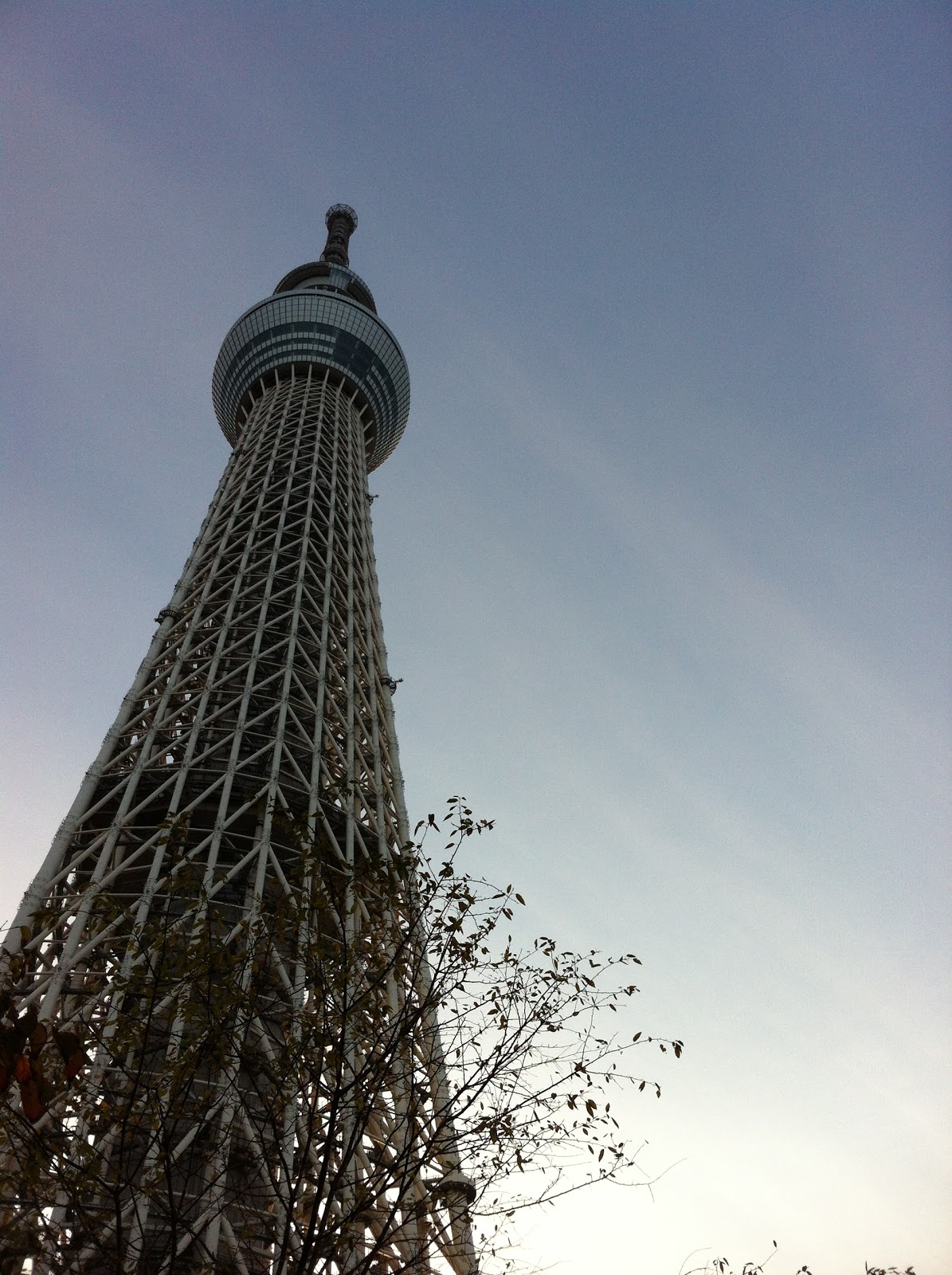
Ranking number 1 - Tokyo Skytree (http://www.tokyo-skytree.jp/en/)
It is the world number one tower - the world's tallest free-standing broadcasting tower with the highest point of 634 meters. Tokyo Skytree was opened on May 22, 2012 and 21 million people have visited the tower and the shopping complex called 'Tokyo Skytree Town' by the end of September. It has become the symblic landmark which brings up Japan from the tragety of the Great Earthquake of 2011.
There are many Japanese-English terms in the list of the Hit Product Predictions for 2013 in Nikkei Trendy. They are: the Japanese style 'long trail', the goods and food for anti-'Locomotive Syndrome', handy size 'tablet', 'water flavour', 'subscription' online shopping, 'synapsology', 'earth cafe', 'micro EV' etc.
 
The trends will overtake us unless we keep up the speed of the trend.
Y★

25 September 2012

New Gadget ★ Bottle Lid Pencil Sharpener

People read books on electronic devices like iBook and Kindle in these days.
People send messages by e-mail rather than writing letters.
People no longer carry around pens and notepad and instead, they have a mobile device that contains all the personal information.

The sales of books and stationary will be moving downwards ... unless the manufactures do not offer the creative goods and services.

One of the most famous Japanese stationary retailers, 'Shachihata' (HP: http://www.shachihata.co.jp/index.php, Japanese language; http://www.artlineworld.com/index.html, http://www.artlineworld.com/wtb/index.html, English site), has released 'Kezuri Cap' in late May 2012 (literary means, sharpener cap) which is a bottle lid pencil sharpener. The company are well known selling stamp pad, (Japanese people even call a stamp pad as 'shachihata') and now becomes a worldwide stationary manufacture and retailer.
 
'Kezuri Cap' is a small gadget with a selection of four lovely colours.
Simply, you put 'Kezuri Cap' on an empty plastic bottle just like a normal lid.
One 500 ml bottle could take as much as 10 pencils' shavings.
The retail price is 315 yen.
 
The children make a mess with a conventional pencil sharpener.
The electronic pencil sharpener is handy but the children tend to sharpen the pencils far too much which get too short to use and go to the bin so quickly.
 
The concept of 'Kezuri Cap' is to reuse the plastic bottle which is environmentally friendly. As long as 'Kezuri Cap' is tightly set, the shavings won't come out even the children drop the bottle.  
It is also convenient to see how much shavings are in a clear bottle. 


It is clean, handy and ecology!
'Kazuri Cap' is a great innovative tool which is just what parents have been eager to have.
 
Y★

19 September 2012

Hello Kitty English Dictionary★

The internationally acknowledged Japan's brand, neither Sony nor Toyota, but Hello Kitty was transformed in overseas and created more sophisticated item which was re imported to the Japanese educational market.
 
The special edition of the Collins Gem Hello Kitty English Dictionary was released first in U.K. in July this year and it is now widely available in Japan.
 
It is entertaining with colourful pictures as well as suitable contents for serious English language learners. It is just perfect to motivate children to take it, look at it, and enjoy learning with Hello Kitty.
 
''With its clear definitions, spelling and grammar tips, this handy little dictionary is the ideal portable companion to answer all your essential language questions. A special Hello Kitty supplement has been included in this edition.'' (from HarperCollins HP:http://www.harpercollins.co.uk/Titles/65177/collins-gem-hello-kitty-dictionary-9780007457205)

The pocket sized Hello Kitty English dictionary is so handy that it encourages both young and old to open up the dictionary more often.
 
It is surely an unique item with Japan's beloved brand, Hello Kitty.
Fantastic!
 
Y★

17 September 2012

Kids' 'Yukata' Fashion Trend in Summer 2012

'Yukata' is a traditional Japanese clothing which is regarded as a casual 'kimono'. It is easy to wear and cool with cotton fabric which are well designed for hot and humid summer season. 'Yukata' is not everyday clothes any longer and people wear it for special occasions like summer festivals and firework displays. Indeed, when you see the people in yukata, it tells the arrival of summer.

There was an eye opening change in kids' yukata this year!

The 'obi' (sash) was replaced with soft see-through fabric.
The 'geta' (wooden clogs or sandals) were replaced with colourful high heel or flat comfy sandals.
And, the straight line form of  yukata has been transformed to the Cinderella dress style.
Even the 'Hello Kitty' brand introduced lovely yukata as pictures below.
The majority of children were still wearing the yukata with pastel colours in the traditional way in Tokyo but more children were enjoying the latest style yukata in the summer festivals in countryside of Japan.
What will never change is that kids love the summer festivals!
The 2012 summer is over in Japan.
Miss it, love it, and wait for summer next year.

Y★

05 July 2012

Japanese kids favourites ★ Human-looking dwarfs ('kobito') vs Funghi Mushrooms ('nameko')

There are things which are ugly but somehow they cannot be disliked. It is what people call 'kimo-kawaii' in Japanese slang.
'kimo' is a shorten word for 'kimoi' or 'kimochi warui', literally means wired, grotesque, and disgusting. 'kawaii' is widely known as cute, charming, fluffy and adorable looking.

Ugly but cute. Pretty but wired.
The contradicted sense is overtaking the Japanese 'kawaii' (cute) culture especially among young people.

Lately, Japanese children are crazy about some 'ugly-cute' characters.

One is called 'kobito zukan' (the Dwarf Encyclopedia)
(The official website: http://kobito-dukan.com/ , Japanese language only) .
The story starts like this:
'They are neither bugs nor plants. Have you ever seen the living creature like this? The Dwarf Encyclopedia,'
One day, a boy found a mysterious creature. He borrowed the Dwarf Encyclopedia from his grandpa and he went for searching the human-looking dwarfs. It is an unique story with colourful pictures that encourages children to experience the exploration, discovery and gaining knowledge in the book.
It ends with a phrase: 'the secret fantasy in the Mather Nature.'

Another funny-looking popular character is 'nameko' (Funghi Mushroom) that is fast widespreading to the world.
(The official website: http://namepara.com/en/about/)
The fictional character, Funghi Mushroom ('nameko'), is detective's assistant to help out the young female detective in the popular game, 'Touch Detective' (http://namepara.com/en/app/touch/ ) in Nintendo DS and iPhone application.

There are varieties of gadgets for those ugly-cute characters such as toys, stationery, accessories, books, DVDs, etc.
The Dwarf Encyclopedia -
Online-shopping: http://shop.kobito-dukan.com/ (Japanese language only)
iPhone App: http://itunes.apple.com/us/app/introduction-to-observing/id408371819?mt=8
Nintendo DS: http://www.pocketgamer.co.uk/r/3DS/Kobito+Dukan/news.asp?c=40845

Funghi Mushroom -
Official goods: http://namepara.com/goods/ (Japanese language only)
iPhone App: http://itunes.apple.com/us/app/mushroom-garden-a.k.a.-funghi/id438171814?mt=8
Nintendo DS: http://www.amazon.co.uk/505-Games-Mystery-Detective-Nintendo/dp/B000MMUW86

'kobito' and 'nameko' are equally cute and they are both the winners!

Y★

04 April 2012

Toys?! what young Japanese girls are playing in these days★


Many of you may wonder what ordinary Japanese primary school girls are playing with in these days?

Nindendo DS, Wii, and tamagotchi (http://www.bandai.com/tamagotchi/) are the main electric toys for young Japanese children but someone like my daughter who has not got her very own electric toys is into the collection of fancy stickers and plastic rubbers.
The specially designed fancy stickers' books are called 'seal-cho' in Japanese. It is often the ring binder style which you can add some refills just like a photo album. You can put stickers and easily remove them from the sheets as many as you like without loosing adhesiveness.
The difference from those in old days is the stickers themselves are just like a little toy. There are glitter, cushy, 3D stickers, as well as the stickers made out of 'washi' - Japanese paper. It tells a story of old and new in a little world.
The plastic rubbers in above picture are some of many that my daughter has. They are so well made and it is pity to rub off something with them.
Children not only lean how to collect and keep them nicely, but they are leaning the 'commerce' with them. Kids show their items to friends and exchange them if they agree upon. If one values greater than the other, they have to exchange a few items to the one special. They are gaining 'negotiation' skills through little toys!!!
A pack of stickers and rubbers are available from 100 yen to several hundreds yen depending on the quality.
It is always fun to see what kids are up to!
Y★

15 March 2012

For shoes lovers, look out for Adidas cherry blossom colour bearfoot shoes.

The plum trees have started to bloom in Tokyo and it is the sign that the spring is almost there. It will be soon surrounded with beautiful pink colour of cherry blossom trees everywhere throughout Japan.
Maybe because of that, Japanese people like pink colour more than any other nationalities.
The sports apparel manufacturer, Adidus, released five-toes bearfoot training shoes, named adipure Trainer, late last year. There have been five-toes shoes with shoe lace from other shoes makers but the adipure Trainer looks fantastic. It reminded me of the 'jika tabi' shoes that Japanese construction workers wear.
(Above picture from Jika Tabi Inc. http://www.jika-tabi.com/)
There are a number of articles that examine how superb the five-toes bearfoot shoes are but interestingly this pinky-pink colour adipure Trainer (ultra pink S12 Yen 9,345) is (maybe) only available for ladies in Japan (US adidas: http://www.adidas.com/us/product/mens-training-adipure-trainer-shoes/TD035).
Check it out for this eye-chatchig traing shoes for the spring!
Y★

25 January 2012

Japan's innovation - Pilot the Frixion Pen

If you have ever lived in Japan, you must have used the pens manufactured by the Japan's largest pen maker and a well known brand, called PILOT. The FriXion pen, the gel ink rolllerball, and FriXion Colors, felt-tip markers are one of my favorite items at the moment, (In Japanese: http://www.pilot.co.jp/frixion/info/, in English http://www.pilotpen.us/FriXion.aspx).
The Frixion pens are smooth and innovative, erasable with the thermosensitive ink and a small rubber at the end of the pen.
I found they were especially handy when my child had to write a number of Christmas cards and New Year cards. Write, erase without crumbs and rewrite! It can be easily rubbed off even by little children. Worth try it!
Y★

10 January 2012

'MOCO MOCO' winter fashion

The fluffy, furry and cute looking fabric is popular in this winter among young Japanese girls including my 8 years old daughter.
It is called 'moco moco'(fluffy in Japanese) fashion and it is available for pajamas, room shoes, leg warmers and socks, gloves, jumpers, etc. etc.
They are pretty affordable and as cheep as 105 yen for small accessories as above picture in '100 Yen Shop' like Daiso (http://www.daiso-sangyo.co.jp/english/).
Not only 'moco moco' makes your body warm but makes you cozy and feel happy as 'must-have-one-of-those' for this winter.
Yx