
... I'm currently helping Matcha Latte Media by writing articles about Japanese culture:<<>>Cherry Blossoms: The Bittersweet Quality of Japan in Bloom ...
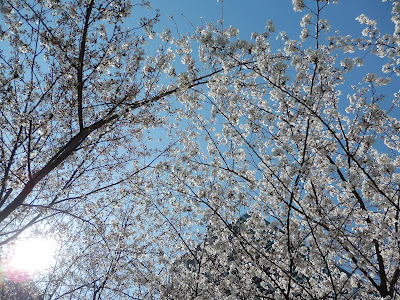
Edited by Matcha Latte Media Why do people love Sakura, otherwise known as Japanese cherry blossoms? Certainly the inspiring beauty of these delicate flowers which adorn most of Japan from the end of March to early April is an obvious reason. But one must look deeper to truly understand why cherry blossoms are one of the most beloved cultural symbols of Japan.
After the gloomy cold Japanese winters, spring is always eagerly anticipated. Flowers and plants awaken; the color of the fields turn verdant once again; and perhaps best of all, the rising temperatures and changing landscape evokes a sense of joy and hope for the good things to come.
Cherry blossoms symbolize the start of spring for the Japanese, so it is no surprise that cherry blossoms have come to represent new beginnings. In the past, cherry blossoms were originally used to predict the year’s harvest. In modern Japan, the cherry blossom season usually coincides with the beginning of the school year as well as the beginning of the new fiscal year for Japanese companies. It is a time of fresh starts, new acquaintances, and next steps.
Still, it is not all about beginnings. March is also a time of school graduations-- and therefore a time to move on and say goodbye. Furthermore, cherry blossom season is notoriously short and hard to predict. And surely there is sadness when one realizes that after seeing the first blossoms that it is only a matter of a couple of short weeks before all the beautiful petals are gone. Indeed, the fleeting nature of the cherry blossoms reminds us all that nothing in life lasts forever and that the most lovely things are often the most fragile.
Sakura-themed Japanese pop music illustrate the bittersweet nature of this cultural icon. If you pay attention to the lyrics of these beautiful songs, they are not just about the beauty of these flowers but also about sadness and pain. They reflect the complicated feelings that spring and sakura evoke for the Japanese people.
Edited by Matcha Latte Media
Why do people love Sakura, otherwise known as Japanese cherry blossoms? Certainly the inspiring beauty of these delicate flowers which adorn most of Japan from the end of March to early April is an obvious reason. But one must look deeper to truly understand why cherry blossoms are one of the most beloved cultural symbols of Japan.After the gloomy cold Japanese winters, spring is always eagerly anticipated. Flowers and plants awaken; the color of the fields turn verdant once again; and perhaps best of all, the rising temperatures and changing landscape evokes a sense of joy and hope for the good things to come.
Cherry blossoms symbolize the start of spring for the Japanese, so it is no surprise that cherry blossoms have come to represent new beginnings. In the past, cherry blossoms were originally used to predict the year’s harvest. In modern Japan, the cherry blossom season usually coincides with the beginning of the school year as well as the beginning of the new fiscal year for Japanese companies. It is a time of fresh starts, new acquaintances, and next steps.
Still, it is not all about beginnings. March is also a time of school graduations-- and therefore a time to move on and say goodbye. Furthermore, cherry blossom season is notoriously short and hard to predict. And surely there is sadness when one realizes that after seeing the first blossoms that it is only a matter of a couple of short weeks before all the beautiful petals are gone. Indeed, the fleeting nature of the cherry blossoms reminds us all that nothing in life lasts forever and that the most lovely things are often the most fragile.
Sakura-themed Japanese pop music illustrate the bittersweet nature of this cultural icon. If you pay attention to the lyrics of these beautiful songs, they are not just about the beauty of these flowers but also about sadness and pain. They reflect the complicated feelings that spring and sakura evoke for the Japanese people.
 When I open my old family photo album, one of my favorite family photos is of all of us picnicking under fully-bloomed cherry blossom trees. My earliest photo in school uniform was taken next to a beautiful sakura tree. There are so many wonderful memories I have of the lovely flowers. Still, when I see the blossoms, I am not only reminded of these happy times; I am also reminded of how things have changed and how my grandparents have long since passed.
But it is precisely because cherry blossoms grace us with its great beauty while reminding us that life is fleeting, that happiness does not last forever, and that no one lives for an eternity, that they have become such an important symbol for the Japanese. Cherry blossoms inspire us because they tell the great truth that life is mysterious and does not last forever, but that is what makes life so precious.
Japan was stunned last spring after the tragic and massive earthquake in 2011. 18,000 souls perished and all of Japan was left in deep mourning. Yet, the cherry blossoms still blossomed, and it was a poignant reminder to the Japanese people that despite such sadness and tragedy, that there was still hope and beauty in the world. It also reminded everyone that life is short and that each day must be cherished. It is not an exaggeration that cherry blossoms have always been an important part of the soul of the Japanese, and it is safe to say that they always will be.
 Y★
Y★
 It is also common to give chocolates to male bosses, co-workers, male classmate, and even family members. Those chocolates are called 'giri-choco', literally means 'obligatory chocolate', and women are obliged to buy dozens of chocolate packages for the day. I personally think it doesn't sound quite right to call this as obligatory but to call 'thanks-always chocolate'. You will see the piles of chocolate packages in the special event sections for Valentine's Day in supermarkets, department stores, and even in 24hours convenience stores.